One More Time, Forever: How Asian Performers Turned the Encore Into a Career-Defining Superpower
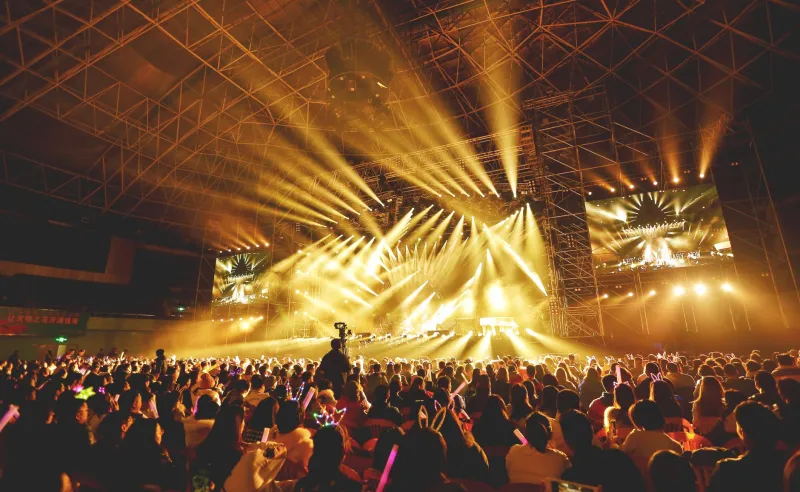
There's a moment at the end of a BLACKPINK concert — right after the lights dim and the crowd noise swells into something almost unbearable — when the four members walk back out onto the stage. No announcement. No fanfare. Just them, a little breathless, a little undone, and completely present. The audience loses it every single time.
That moment isn't accidental. It's architecture.
In Asian entertainment culture, the encore has evolved far beyond its Western origins as a polite theatrical tradition. It's become a philosophy — a deliberate, emotionally loaded act that communicates something deeper than "we have one more song." It says: we're not done with you, and we hope you're not done with us.
For American audiences used to streaming albums on shuffle and treating concert tickets like one-time purchases, that distinction might sound small. It isn't.
The Encore as Emotional Contract
BTS didn't build one of the most devoted fanbases on the planet purely through music. They built it through moments — and a lot of those moments happened after the show was technically supposed to end.
ARMY veterans will tell you about the group's practice of staying on stage long after encores concluded, waving, talking to the crowd, sometimes visibly tearing up. These weren't staged PR beats. They were extensions of a performance philosophy rooted in the Korean concept of jeong — a kind of deep emotional bond that forms through shared, repeated experience. The encore wasn't a bonus. It was the most honest part of the night.
This stands in sharp contrast to how American entertainment has historically treated the finale. In the U.S., endings are often clean, contractual, almost transactional. The last song plays, the lights come up, you find your Uber. The experience is complete. Boxed. Filed away.
Asian performance culture resists that closure. And it turns out, so do fans.
Hong Kong Cinema and the Art of the Bonus Scene
Long before Marvel made post-credits scenes a global phenomenon, Hong Kong cinema was playing with the idea of "one more thing" as a tool for audience retention and affection-building.
Filmmakers like Wong Kar-wai and action legends like Jackie Chan understood intuitively that audiences didn't just want a story — they wanted a relationship with the people telling it. Chan's now-iconic blooper reels, rolled over the end credits of his films, did something quietly radical: they made the audience complicit in the filmmaking process. You weren't just watching a finished product. You were being let in.
That intimacy — the sense that the performer is giving you something extra, something unpolished, something real — is exactly what the modern encore economy runs on. It's not about content volume. It's about perceived access.
K-Pop's Encore Economy
The K-pop industry has essentially industrialized this instinct, and the results are staggering.
Bonus tracks, limited-edition photobook versions, fan sign event recordings, "behind the stage" documentary content — these aren't afterthoughts in K-pop release strategy. They're load-bearing walls. Groups like SEVENTEEN, aespa, and NewJeans have built entire content ecosystems around the idea that the official release is only the beginning of the fan experience. Every encore, every fan-cam, every acoustic version released weeks after the album drop is another thread in a web designed to hold people close.
And it works. K-pop fans don't just stream songs — they invest in artists. They follow careers across years and decades. The encore culture teaches them, early and often, that there's always something more coming. Loyalty isn't assumed. It's cultivated, one "one more time" at a time.
For American artists, who often operate on a release-cycle model that treats each album as a fresh start rather than a continuation, this is a genuinely different way of thinking about career longevity.
What the Encore Actually Communicates
Here's the thing about a great encore: it only works if the audience believes the performer means it.
When Celine Dion — who has absorbed significant influence from Asian performance traditions through her years of Las Vegas residency work and global touring — walks back out on that stage, the crowd goes wild not because they expected another song, but because they didn't. The encore's power is proportional to its apparent spontaneity, even when everyone in the building knows it's coming.
Asian entertainers have mastered the art of making the expected feel unexpected. It's a skill built on genuine emotional investment in the audience, and audiences can tell the difference. A mechanical encore — where the performer is clearly just fulfilling an obligation — lands flat. An encore that feels like the performer couldn't quite let go? That's the one people talk about for years.
This emotional authenticity is something that can't be faked at scale, which is why the American entertainment industry's tendency to manufacture "fan moments" through PR campaigns often misses. You can't engineer jeong. You can only create the conditions for it to grow.
Lessons for American Entertainers
So what does all of this mean for American artists trying to build careers that last?
A few things worth considering:
Endings are opportunities, not conclusions. Every final song, every last scene, every closing chapter is a chance to deepen the relationship rather than close it. What can you give that you didn't have to?
Intimacy scales if you're intentional. K-pop groups perform for 50,000 people and still manage to make individual fans feel seen. That's not magic — it's a commitment to content and communication that extends well beyond the main event.
Repetition builds meaning. In Asian performance philosophy, doing something again doesn't diminish it — it deepens it. The second time a fan hears a song at a concert, it hits differently than the first. The third time, it's theirs. Lean into that.
The bonus is the point. Whether it's a hidden track, a fan-exclusive livestream, or a genuinely unscripted moment at the end of a show, the extras communicate something the main event can't: that you care enough to give more than you were required to.
The Stage That Never Fully Clears
At its heart, the Asian encore philosophy is about refusing to let a connection end cleanly when it doesn't have to. It's about recognizing that audiences — real, loyal, emotionally invested audiences — don't actually want the show to be over. They want to stay in the feeling a little longer.
The performers who understand this, who walk back out into that light one more time not because the contract demands it but because the moment calls for it, are the ones who build the kind of careers that American entertainers spend decades chasing.
The stage doesn't have to go dark. Not yet. Not when there's still something left to give.