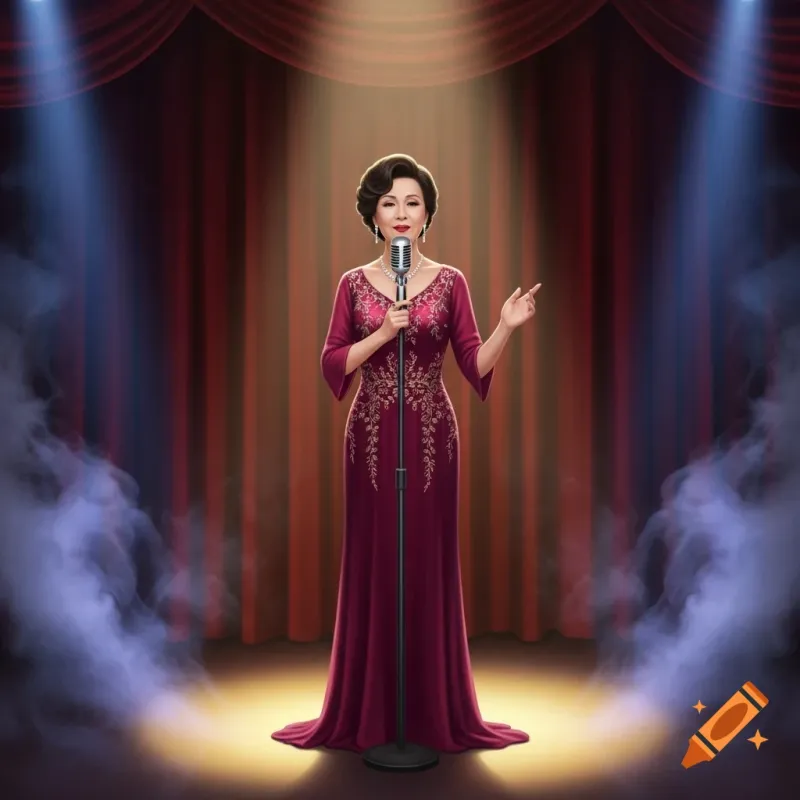
No Exit Plan: How Asia's Legendary Performers Are Making 'Retirement' Irrelevant
There's a particular kind of American celebrity story we've all seen play out a hundred times. The farewell tour. The emotional final bow. The press release that thanks the fans and quietly announces a move to something quieter — a vineyard in Napa, a memoir deal, maybe a judging seat on a reality competition show. It's a whole genre unto itself: the dignified exit.
But spend any time paying attention to the entertainment landscapes of Japan, South Korea, Hong Kong, or Taiwan, and you start to notice something different. Performers who should, by Western logic, have stepped aside decades ago are still showing up — not as nostalgia acts, not as punchlines, but as genuinely vital, culturally relevant artists. And Americans, increasingly tuned into Asian pop culture through streaming platforms and social media, are starting to ask: what exactly are they doing differently?
The Stage Doesn't Have a Shelf Life
Take Anita Mui, the late Cantopop icon whose influence still shapes Hong Kong entertainment decades after her passing. Or consider Teresa Teng, whose recordings continue to soundtrack everything from Taiwanese family dinners to TikTok videos made by Gen Z Americans who weren't alive when she performed. These women didn't just have careers — they built legacies that operate outside of time.
But it's not just about legacy in the posthumous sense. Look at living performers like Jacky Cheung, often called the "God of Songs" in Cantonese-speaking communities, who regularly sells out stadium tours across Asia and beyond well into his sixties. Or Japanese actress and singer Momoe Yamaguchi, who voluntarily retired at her peak but remains so culturally embedded that her absence itself became a kind of ongoing presence. Then there's South Korea's Na Hoon-a, a trot music legend who continues to command enormous audiences and genuine emotional reverence from fans young and old.
These aren't people coasting on nostalgia. They're artists who have evolved, adapted, and in many cases deepened their connection to audiences over time — something the American entertainment industry, obsessed with youth and reinvention for its own sake, often struggles to support.
Culture Does the Heavy Lifting
A big part of what keeps Asian performers in the game isn't just personal drive — it's the cultural architecture around them. In many East and Southeast Asian societies, age doesn't automatically signal irrelevance. Elders are associated with wisdom, mastery, and earned authority. An older performer isn't someone the audience tolerates out of nostalgia; they're someone the audience respects because of what they've survived and synthesized.
This shows up in something as simple as how fan communities are structured. In South Korea, fandoms for veteran artists — think Cho Yong-pil or Lee Sun-hee — operate with a loyalty and organizational intensity that rivals the most devoted K-pop fandoms. These aren't passive consumers; they're active cultural custodians who show up, buy tickets, and make clear that longevity is something worth celebrating.
In Japan, the concept of shokunin — roughly translated as artisan mastery — extends naturally into performance. A singer, actor, or dancer who has spent forty years refining their craft isn't seen as outdated. They're seen as someone who has done the work. That framing changes everything about how both the performer and the audience relate to time.
The Financial Reality Nobody Talks About
It would be incomplete to discuss this without acknowledging the economic layer. In many parts of Asia, the social safety nets that might allow a performer to comfortably step away simply don't exist in the same form as in the US. Pension systems vary widely, and for entertainers who spent their peak earning years in industries without strong union protections or retirement infrastructure, staying active isn't just a passion — it's practical.
But here's the interesting twist: necessity and love often turn out to be pretty good creative partners. Many performers who kept going for financial reasons discovered, along the way, that they had more to say artistically. The stage became a place of genuine reinvention rather than just income maintenance. That's a more complicated and more honest story than the simple "they just love it too much to stop" narrative.
What This Looks Like When It Crosses the Pacific
American audiences are paying attention, even if they don't always frame it that way. The success of multigenerational Asian concert tours in cities like Los Angeles, New York, and Houston — where large diaspora communities create built-in audiences — has started to shift what American promoters think is commercially viable. A Cantopop legend filling a venue in Flushing or a trot star selling out a theater in Koreatown isn't a niche curiosity anymore. It's a market signal.
And it's filtering into broader American cultural conversations too. As Gen Z and millennial Americans push back against hustle culture and start questioning the idea that a career has a natural expiration date, the model offered by Asian performers becomes quietly compelling. What if your best work isn't behind you at forty? What if reinvention doesn't require abandoning everything you've built? What if staying in the game — adapting, deepening, refusing to disappear — is actually the more interesting artistic choice?
The Encore as a Creative Philosophy
Perhaps the most useful reframe is this: in Western entertainment, the encore is a formality — a crowd-pleasing epilogue to the main event. In the careers of Asia's most enduring performers, the entire later chapter of a career is the encore, and it's often where the most interesting work happens.
Actress Kathy Chow reinventing herself across decades of Hong Kong drama. Japanese enka singer Hikawa Kiyoshi expanding his audience across generations. Korean actor Ahn Sung-ki, whose career spans over sixty years and shows no signs of contracting in ambition or scope. These aren't stories about clinging to relevance. They're stories about what happens when a performer is given — or creates — the conditions to keep growing.
For Americans rethinking what a career arc should look like, that's not just inspiring. It's instructive. The exit plan, it turns out, might be the most overrated strategy in the business.