Own Less, Live More: How Asian Minimalism Is Quietly Dismantling America's Bigger-Is-Better Obsession
Photo: Nadiredg, CC0, via Wikimedia Commons
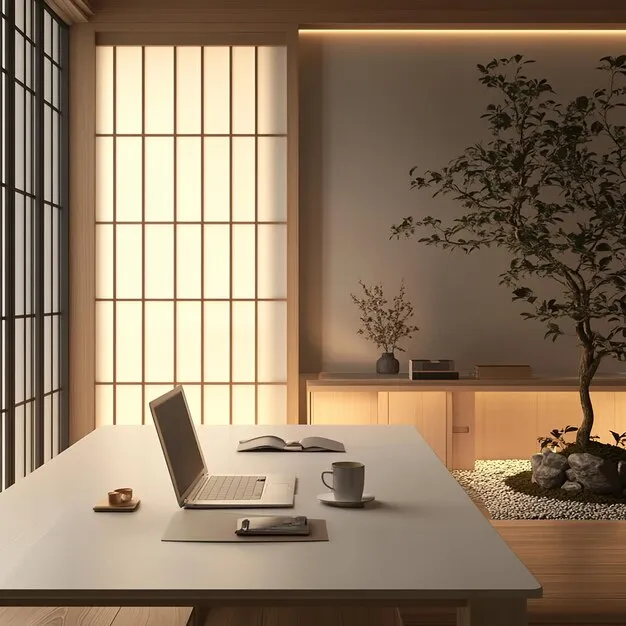
There's a certain kind of apartment that's been showing up all over American social media lately. Clean surfaces. A single ceramic bowl on a wooden shelf. Neutral linen, natural light, and absolutely nothing that doesn't belong. It looks expensive—but not in the flashy, logo-forward way Americans have long associated with wealth. It looks calm.
This is the aesthetic face of a much deeper cultural shift, one that's been quietly building for years and is now impossible to ignore. Across fashion, home design, tech, and even grocery shopping, younger Americans are walking away from maximalism—the more-is-more, fast-fashion, pile-it-high consumer culture that defined so much of the late 20th century—and moving toward something rooted, intentional, and increasingly influenced by Asian design philosophy.
And no, this isn't just a TikTok trend. It's a values realignment.
The Roots of 'Less Is More' Run Deep in Asian Culture
Long before Marie Kondo made headlines by asking Americans whether their belongings sparked joy, Japanese culture had been practicing the art of ma (間)—the concept of meaningful negative space. In Japanese aesthetics, emptiness isn't absence. It's presence. A room with room to breathe. A shelf with one carefully chosen object. Silence between notes in music. Ma teaches that what you don't include is just as powerful as what you do.
Similarly, the Chinese concept of jian (简)—simplicity—runs through everything from classical ink painting to traditional architecture. The idea isn't deprivation; it's refinement. You strip away the unnecessary until only the essential remains, and in that essential, you find something closer to truth.
These philosophies have been practiced for centuries, but they're landing in American culture right now with particular force—because Americans, especially younger ones, are exhausted.
Why Gen Z and Millennials Are Done With Stuff
Let's be honest: the last decade of American consumer culture has been a lot. Fast fashion churning out micro-trends every two weeks. Amazon carts full of things you didn't need and won't use. Living rooms that look like a furniture showroom threw up. Instagram feeds that turned home decor into a competitive sport.
But something started to crack. Climate anxiety made disposable culture feel morally uncomfortable. The pandemic forced people to live inside their spaces more than ever, and a lot of what they saw didn't feel good. And financially, a generation dealing with student debt and housing costs started questioning whether buying more things was actually making them happier.
Spoiler: it wasn't.
Enter the quiet luxury movement—a term that's been bouncing around fashion circles but extends far beyond what you wear. At its core, quiet luxury is about quality over quantity, intention over impulse, and presence over performance. And it maps almost perfectly onto Asian minimalist principles that have existed for generations.
From Closets to Living Rooms: What the Shift Looks Like in Real Life
In fashion, the capsule wardrobe concept—a small, curated collection of high-quality, versatile pieces—has exploded in popularity among American consumers who are tired of chasing trends. Brands inspired by Japanese workwear aesthetics, like the cult following around boro patchwork and utilitarian silhouettes, are pulling huge numbers on resale platforms. The appeal isn't just visual. It's the idea that a garment should last, should mean something, should earn its place in your life.
In home design, the influence is even more visible. Wabi-sabi, the Japanese aesthetic that finds beauty in imperfection and impermanence, has moved from design school theory to mainstream American interior design. Handmade ceramics with irregular edges. Raw wood with visible grain. Walls painted in muted earth tones rather than stark white. The goal isn't perfection—it's authenticity.
Even in tech, minimalism is having a moment. There's a growing counter-movement to feature-bloated gadgets, with consumers gravitating toward products that do fewer things but do them beautifully. Japanese brands have long understood this—think of how a well-designed Japanese kitchen knife or a Muji notebook feels compared to its cheaper, busier competitors. That philosophy is now influencing how American consumers evaluate everything from laptops to kitchen appliances.
Sustainability Gets a Soul
Here's where this shift gets really interesting: Asian minimalism doesn't just change how Americans shop. It changes why they shop.
When you adopt a philosophy that values longevity and intention, sustainability stops being a marketing buzzword and becomes a natural byproduct. Buying one well-made piece instead of five cheap ones is better for your wallet, your space, and the planet. The concept of mottainai (もったいない) in Japanese culture—a deep sense of regret over waste—translates into a practical ethic: repair instead of replace, use until truly worn out, choose materials that age well.
American consumers are increasingly connecting these dots. Thrift stores and vintage markets are booming not just because they're affordable, but because they offer the kind of history and singularity that mass production can't replicate. The secondhand economy in the US hit over $40 billion in recent years, and much of its cultural momentum comes from this same desire for meaning over mass.
Minimalism as a Wellness Practice
There's also a mental health dimension to all of this that deserves more attention. The relationship between physical clutter and psychological stress is well-documented—cluttered spaces elevate cortisol levels and make it harder to relax or focus. But Asian minimalism goes further than just tidying up.
Practices like feng shui in Chinese tradition and kanso (simplicity) in Japanese Zen aesthetics treat physical space as a direct reflection of mental and spiritual state. When your environment is intentional, the thinking goes, your mind follows. This is why so many Americans who've embraced minimalism report not just cleaner homes, but clearer heads.
It's a wellness practice disguised as an interior design choice—which is very on-brand for a generation that's blurring the lines between lifestyle and self-care.
The Bigger Picture
What's happening here is more than a design trend or a shopping habit. It's a cultural renegotiation. Americans are questioning a foundational myth—that more equals better, that abundance signals success, that the good life is a full cart and a packed closet.
Asian philosophy, with centuries of thought behind the virtue of simplicity, is offering a compelling alternative. Not austerity. Not deprivation. But a life where every object, every space, every choice carries weight because it was made with care.
In a noisy, overcrowded world, that kind of quiet is starting to sound like the ultimate luxury.
And honestly? It looks pretty good too.