Wash, Tap, Breathe: Why Americans Are Turning Their Skincare Routines Into a Daily Mindfulness Ritual
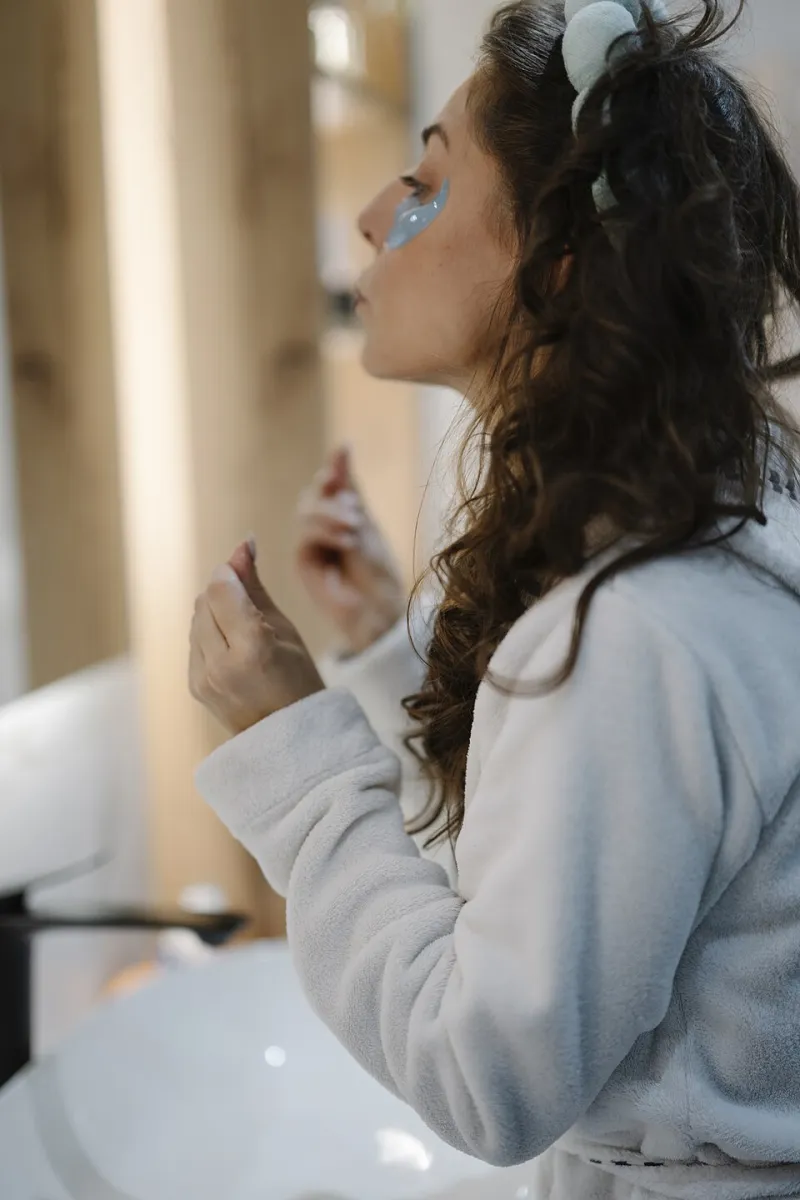
Photo: Shixart1985, CC BY 2.0, via Wikimedia Commons
Somewhere between the second essence and the third serum, something shifts. Ask anyone who has committed to a multi-step Asian skincare routine — really committed, not just tried it for a week — and they'll often describe a moment that has nothing to do with their pores. It's the moment the routine stops being a chore and starts being a ritual. A quiet pocket of time that belongs entirely to them.
This is the part of the K-beauty and J-beauty conversation that doesn't get enough airtime. We talk a lot about the results — the luminous skin, the reduced hyperpigmentation, the dewy finish. But a growing number of Americans are discovering that the most transformative outcome of adopting an Asian-inspired skincare routine isn't visible in a mirror. It's felt somewhere quieter.
From 10 Steps to Ten Minutes of Presence
The Korean 10-step skincare routine — oil cleanser, water-based cleanser, exfoliant, toner, essence, ampoule, serum, sheet mask, eye cream, moisturizer, SPF — sounds intimidating on paper. And when it first went viral in American beauty media around 2015, most of the coverage focused on the products. Which essences were worth it. Which sheet masks delivered. Which serums were worth the splurge.
But something interesting happened when people actually started doing it. The routine, by its very nature, demanded slowness. Each step required attention — patting rather than rubbing, pressing rather than swiping, pausing to let a product absorb before moving to the next. For a culture accustomed to three-in-one body wash and a two-step cleanse-and-moisturize routine done in under ninety seconds, this was genuinely radical.
"What I hear again and again from my clients is that the routine gave them permission to stop," says Dr. Elaine Song, a licensed therapist in Los Angeles who incorporates wellness-adjacent beauty practices into her work with clients experiencing anxiety and burnout. "In a culture that glorifies productivity, spending fifteen intentional minutes on yourself — with no phone, no multitasking, just presence — can feel almost transgressive. And that's exactly why it works."
The Ritual Architecture of Asian Skincare
It's worth understanding why Asian skincare traditions, specifically, lend themselves so naturally to this kind of mindful practice.
In Korean beauty culture, skin is understood as a long-term investment rather than a cosmetic quick fix. The philosophy is deeply preventative — you care for your skin consistently, patiently, over years. This runs counter to the American beauty market's obsession with overnight transformations and dramatic before-and-afters. It requires the practitioner to develop something genuinely countercultural: patience.
Japanese skincare carries its own contemplative traditions. Bifuka (美肌), the pursuit of beautiful skin, is woven into broader Japanese cultural values around discipline, self-care, and the appreciation of subtle, incremental change. Techniques like oshi (pressing motions) and nagashi (flowing strokes used in facial massage) aren't just application methods — they're almost meditative in their deliberateness.
And then there's gua sha (刮痧), the ancient Chinese practice of using a smooth-edged tool — traditionally jade or rose quartz — to massage the face and neck in specific strokes. Originally a therapeutic technique used across the body in Traditional Chinese Medicine, its facial adaptation has become one of the most talked-about wellness practices in the US. But practitioners who stick with it often say the physical benefits are secondary to the ritual itself.
"I do gua sha every morning for about eight minutes," says Priya Mehta, a marketing manager in Chicago. "I light a candle, I put on the same playlist, and I just... do it. It's become almost meditative. I'm not thinking about my to-do list. I'm thinking about the strokes, the pressure, my breath. By the time I'm done, I feel like I've already done something good for myself, and the day hasn't even started."
What the Research Actually Says
The connection between intentional self-care rituals and mental health outcomes isn't just anecdotal. Research in behavioral psychology supports the idea that structured, sensory-rich routines can function as anchors — reducing anxiety by creating predictable, controllable pockets of time in otherwise chaotic days.
A 2021 study published in PLOS ONE found that self-care rituals — defined as intentional, repeated behaviors focused on the self — were associated with lower perceived stress and higher feelings of self-worth. Skincare, when approached with intention rather than obligation, fits this definition precisely.
Dr. Song points to the sensory dimension as particularly significant. "When you're applying a product with deliberate touch — pressing, tapping, massaging — you're activating the parasympathetic nervous system. You're telling your body it's safe to slow down. That's not a metaphor. That's physiology."
The warmth of a facial steam, the cool weight of a jade gua sha tool, the scent of a botanical serum — these sensory inputs are grounding in a clinical sense. They pull attention into the body and into the present moment, which is precisely what mindfulness-based stress reduction techniques aim to do.
Men Are in on It Too
While multi-step skincare has historically been marketed to women, one of the more interesting dimensions of this wellness shift is how it's cutting across gender lines. K-beauty culture, which has long embraced male skincare through the concept of kkonminam (꽃미남, or "flower boy" aesthetics), has helped normalize skincare as a practice for men in a way that Western beauty marketing rarely has.
Derrick James, a 34-year-old teacher in Atlanta, started a five-step routine after his girlfriend introduced him to a Korean toner. "I was skeptical at first. But then I realized I was looking forward to it every night. It was the one part of my day that was just mine." He now practices a modified version of the routine each morning and evening, and says it's become one of his primary stress-management tools. "Meditation never clicked for me. This did. Maybe because it gives me something to actually do with my hands."
Building Your Own Intentional Routine
You don't need to commit to ten steps to access the mindfulness benefits of an Asian-inspired skincare ritual. What matters more than the number of products is the quality of attention you bring. A few principles to start with:
- Create consistency — do your routine at the same time each day, in the same space. Ritual thrives on repetition.
- Remove distractions — put your phone in another room. This is your time.
- Use touch deliberately — pat, press, and massage rather than swiping products on quickly. Feel what you're doing.
- Engage your senses — choose products with scents that calm or energize you intentionally. Let the texture of each product register.
- Breathe — seriously. Take three slow breaths before you begin. It signals to your nervous system that this time is different.
The beauty industry will keep selling us products. But the most valuable thing that Asian skincare traditions have given American wellness culture might not come in a bottle at all. It's the reminder that showing up for yourself — slowly, consistently, with full attention — is its own kind of medicine.