Chi, Flow, and Open Floor Plans: How Ancient Asian Spatial Wisdom Is Reshaping the American Workplace
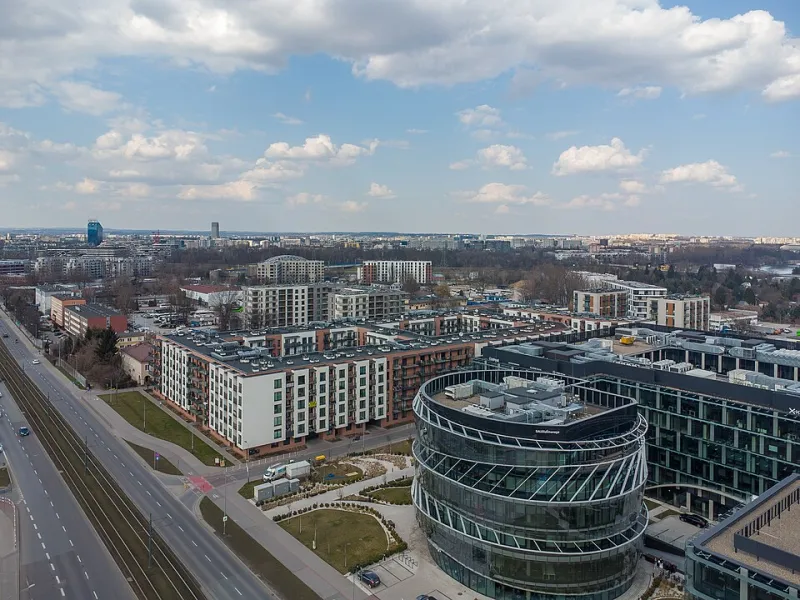
Photo: Igor123121, CC BY 4.0, via Wikimedia Commons
Walk into the San Francisco headquarters of a certain mid-sized tech company and you might notice something feels... different. The reception desk sits at a diagonal rather than flush against the wall. Plants cluster near the windows in deliberate groupings. The conference room — nicknamed "the mountain room" by employees — has its primary seating positioned so that no one sits with their back to the door. These aren't accidental design choices. They're the result of a months-long consultation with a certified feng shui practitioner, and according to the company's Head of People Operations, employee satisfaction scores have climbed noticeably since the redesign.
This kind of story is becoming less of a quirky outlier and more of a recognizable trend across corporate America.
What Feng Shui Actually Means — And Why It Matters Now
Feng shui (风水), literally translated as "wind and water," is a Chinese philosophical system developed over three millennia that examines how the arrangement of space affects the flow of energy — or chi (气) — through an environment. For centuries, it shaped the design of everything from imperial palaces to family homes across East Asia. But in the American corporate world, it's experiencing a genuine renaissance.
And the timing makes a lot of sense. Post-pandemic, companies are reckoning with a workforce that's more attuned than ever to how their physical environment affects their mental state. Burnout is at record levels. Hybrid work has made the office a place people choose to go rather than have to go — which means the space itself needs to earn that commute.
"People walked back into their offices after two years of working from home and suddenly noticed everything," says interior designer Maya Holloway, who has incorporated feng shui principles into corporate projects in Chicago and Atlanta. "They noticed that the lighting was harsh, that they were crammed into corners, that there was no sense of calm anywhere. That's when clients started asking me about different approaches — and feng shui kept coming up."
The Principles Behind the Practice
Feng shui isn't a one-size-fits-all rulebook. But several core concepts translate particularly well into modern office design:
The Commanding Position: In feng shui, the most powerful seat in any room is one that faces the entrance but isn't directly in line with the door — giving the occupant a sense of security and control. For employees, this translates into workspace arrangements where people can see who's approaching without feeling exposed or startled. Ergonomically and psychologically, it reduces the low-grade anxiety that comes from sitting with your back to a busy hallway.
The Bagua Map: This energetic blueprint divides a space into nine zones, each corresponding to different life areas — career, relationships, creativity, health, and more. Corporate wellness directors are using it to intentionally designate spaces within an office for specific purposes, rather than defaulting to the generic "collaboration area" that ends up serving no purpose particularly well.
The Five Elements: Wood, fire, earth, metal, and water each carry distinct energies. Thoughtful integration of these through materials, colors, and textures creates a more balanced environment. Think natural wood desks paired with rounded metal fixtures, small water features near reception, and earthy tones in rooms designated for focused work.
Clutter as Chi Blocker: Perhaps the most immediately accessible principle — stagnant, cluttered spaces trap energy. The organizational wisdom embedded in feng shui aligns neatly with modern research on how physical clutter increases cortisol levels and reduces cognitive performance.
Real Spaces, Real Results
Jessica Tran, a corporate wellness director at a healthcare company in Houston, championed a feng shui-informed redesign of her company's main office floor last year. The project involved repositioning workstations, introducing living plant walls, removing a maze of storage cabinets that blocked natural light, and repainting the break room in warm earth tones.
"I'll be honest — I had to make the business case carefully," she says with a laugh. "I didn't lead with 'we're doing feng shui.' I led with 'we're optimizing spatial flow for wellbeing and productivity.' But the principles were absolutely rooted in feng shui and biophilic design concepts from Japanese architecture." Three months after the redesign, absenteeism on her floor dropped and the team's internal engagement survey scores improved in the categories of "sense of calm at work" and "feeling supported by my environment."
For Marcus Webb, a graphic designer in Brooklyn, the change was more personal. After reading about feng shui for home offices, he rearranged his desk so it faced the room's entrance, added a small tabletop fountain, and cleared a bookshelf that had been blocking the window behind him. "I thought it would be a placebo thing," he admits. "But I genuinely feel less scattered. I sit down and I feel like I can actually work. It's hard to explain but the space just feels like it's working with me now."
Beyond Feng Shui: The Broader Asian Design Influence
Feng shui is just one thread in a larger tapestry of Asian design philosophy making inroads into American workplaces. Japanese concepts like ma (間) — the intentional use of negative space and pause — are influencing minimalist office designs that prioritize breathing room over maximizing square footage. The Korean idea of nunchi (눈치), a kind of spatial and social attunement, is informing how some companies are rethinking shared spaces to better accommodate different communication styles and energy levels.
Biophilic design — integrating natural elements into built environments — draws heavily from both Chinese and Japanese traditions that have long emphasized human harmony with the natural world. Today, it's one of the fastest-growing segments of commercial interior design in the US.
Bringing It Into Your Own Space
You don't need a full office overhaul to start experimenting. Here are a few entry points:
- Reposition your desk so you can see the room's entrance without your back being to a window or open space behind you.
- Declutter one zone — even clearing a single desktop or shelf can shift how a space feels energetically.
- Add one living element — a plant, a small water feature, or even a bowl of stones can introduce natural energy into an otherwise sterile environment.
- Be intentional about color — soft greens and blues support focus and calm; warm yellows and oranges energize creative spaces.
- Let light in — remove barriers to natural light wherever possible. In feng shui, light is one of the primary carriers of positive chi.
The broader point is this: the way we arrange our environments is never neutral. Asian design traditions have understood this for thousands of years. American workplaces are finally catching up — and the results, by most accounts, are worth paying attention to.