Follow the Skewers: America's 7 Best Asian Night Markets (and Why They're Beating the Mall)
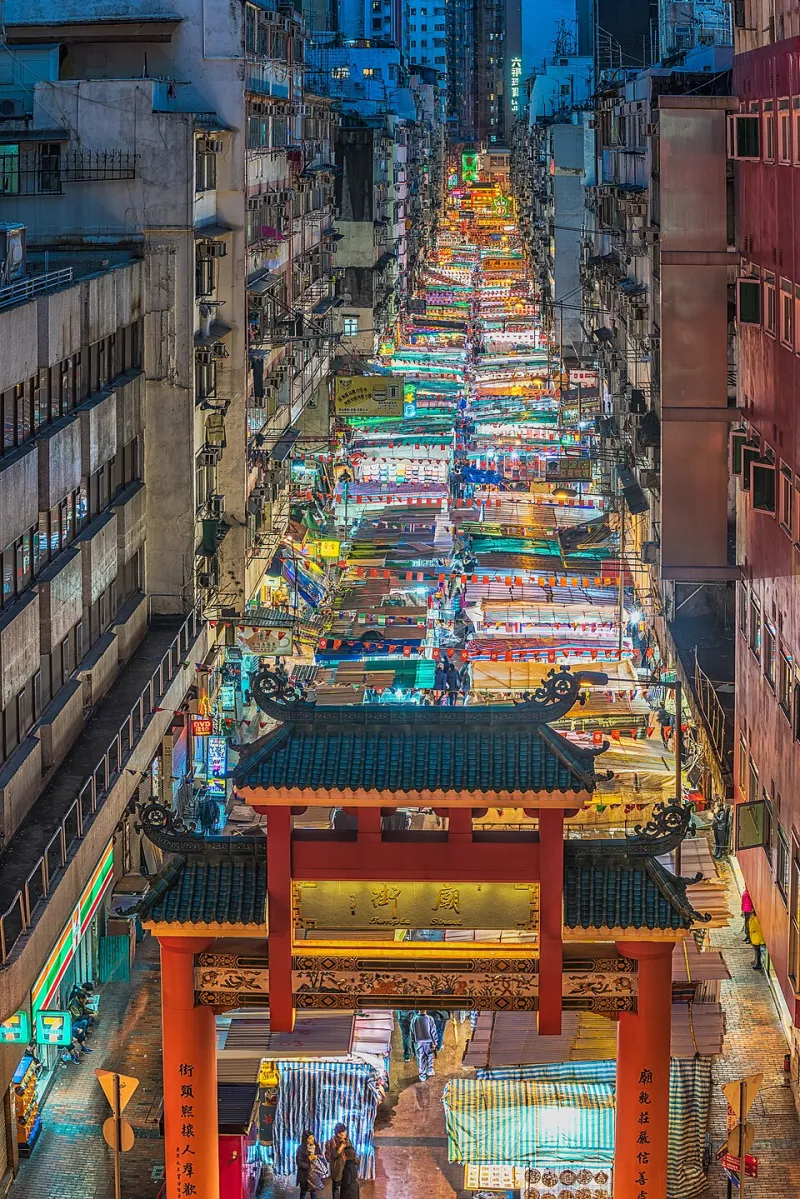
Photo: Steven Wei stevenwei, CC0, via Wikimedia Commons
The American mall was supposed to be our gathering place. It wasn't, really — it was a place to buy things, and when the buying moved online, the gathering evaporated with it. The Asian night market never made that mistake. Nobody comes to a night market to shop. They come to eat, wander, and stand around with friends under strings of lights, and the shopping is a happy accident.
That distinction turns out to be everything. Here are the markets doing it best right now.
1. Richmond Night Market — Richmond, BC (Yes, Worth the Border Trip)
Fine, it's technically Canada, but no American list is honest without it, because it's the blueprint: 100+ vendors, the famous zombie-themed corn dogs, and a crowd of 10,000 on a Saturday night that somehow never feels hostile. Go once and every US market becomes a comparison.
2. 626 Night Market — Arcadia, CA
The granddaddy of the US scene, named for the San Gabriel Valley's area code and now spreading to multiple SoCal locations. It's enormous, occasionally overwhelming, and home to some of the most inventive fusion food in the country — the place where the ramen burrito was arguably born. Come hungry, come early, wear walking shoes.
3. H Street NE Night Market — Washington, DC
Smaller and more street-fair than full bazaar, but the density of Southeast Asian vendors — Lao sausages, Filipino skewers, Thai rolled ice cream — has made it the capital's best warm-weather ritual.
4. Atlanta Night Market — Duluth, GA
Gwinnett County's Asian food scene is one of America's best-kept secrets, and the night market is its front porch. Northern Chinese hand-pulled noodles a few stalls down from Korean corn dogs and Vietnamese coffee, with a family-friendly crowd that spans three generations and a dozen languages.
5. Queens Night Market — New York, NY
The most diverse market in the country, full stop. The $6 price cap per item keeps it genuinely accessible, and the vendor roster reads like a United Nations of home-cooking: Burmese, Uyghur, Trinidadian, Indonesian. It's less "Asian night market" than "night market the Asian way" — and the format is winning.
6. Night Market Philadelphia — multiple neighborhoods
A roving pop-up that rotates through different neighborhoods each season, which is exactly the right model for a city of distinct village-like quarters. Chinatown's turn is always the most packed.
7. AsiaTown Night Market — Cleveland, OH
Proof this isn't just a coastal phenomenon. Cleveland's AsiaTown district throws a market that punches way above its weight — a hundred vendors, live music, and a community that shows up in 40-degree weather.
Why the Format Works When Malls Don't
Sociologists talk about "third places" — spots that are neither home nor work, where community actually happens. Ray Oldenburg, who coined the term, argued these spaces run on low stakes and easy entry. A night market nails every criterion: no ticket, no dress code, no obligation to buy anything specific. You can show up alone, eat six dollars of dumplings, and leave feeling like you participated in something.
The economics work too, which is why the stalls matter as much as the spring rolls.
The Vendor Is the Story
Night markets have quietly become America's most accessible small-business incubator. Commercial kitchen space is brutal to rent; a weekend stall at 626 or Queens costs a fraction of a brick-and-mortar and comes with a built-in crowd of thousands. Some of the biggest names in Asian-American food — the folks now with cookbook deals and multiple locations — started by selling out of a folding table.
For immigrant families especially, the stall is a low-risk translation of a skill that crosses every border: cooking for strangers until the strangers become regulars. That's not just commerce. That's the community forming in real time, one skewer at a time.
Find your nearest market, bring a friend or make one in line, and eat standing up. That's the whole ritual.